Find your current AI learning edge
Locate the gap between feeling fluent and being able to diagnose a failure. The point is not to label your level; it is to choose the next kind of practice that will change how you work.
THE QUESTION THIS PAGE ANSWERS
ANSWER FIRSTWhat is the key idea behind “Find your current AI learning edge”?
Locate the gap between feeling fluent and being able to diagnose a failure. The point is not to label your level; it is to choose the next kind of practice that will change how you work.
Confidence is a signal to investigate, not a final answer. Newwebplay treats the learning curve as a navigation tool. When a concept feels obvious, test whether you can predict its failure mode and explain the trade-off to someone else.
Name one AI behavior you can use but cannot yet explain.
Mistaking familiarity with the interface for understanding the system.
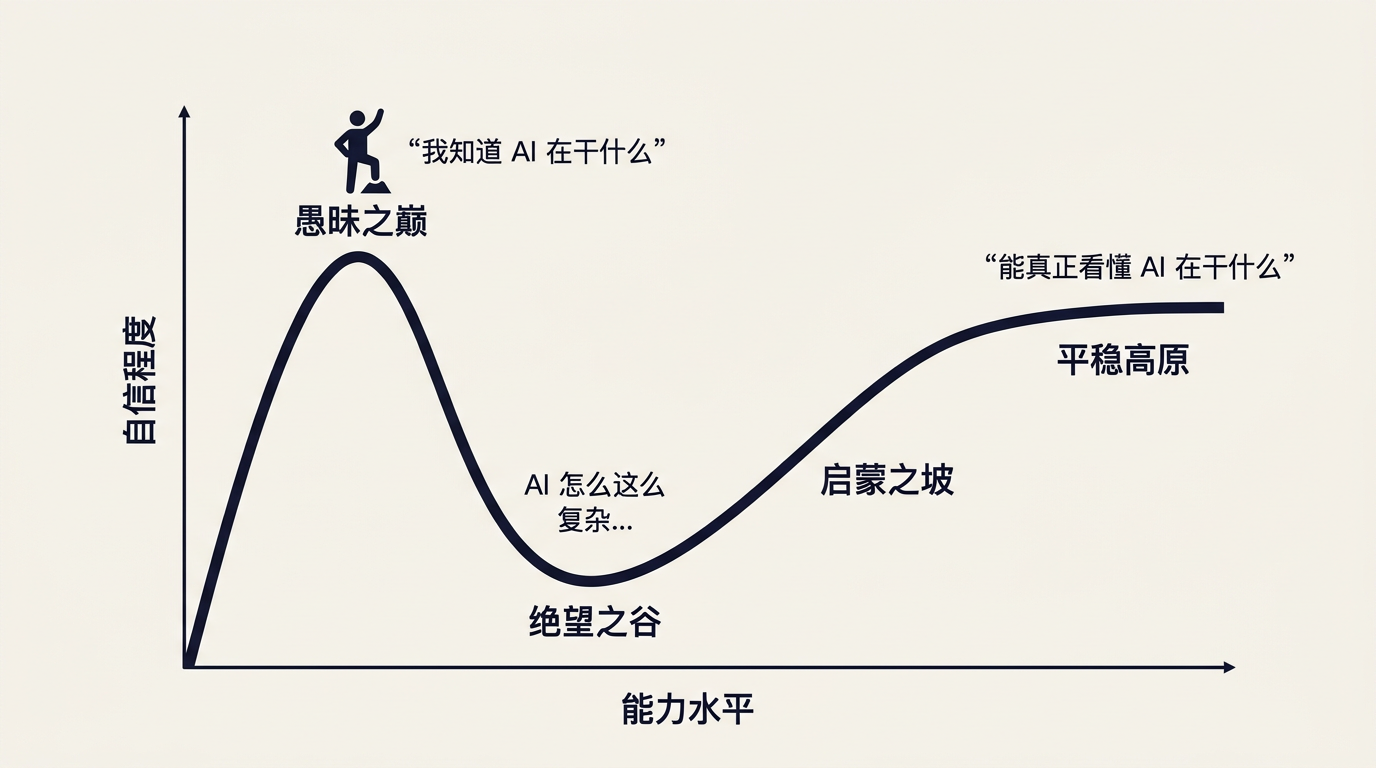
Why “Learning Curve” can find relevant content
“Locate the gap between feeling fluent and being able to diagnose a failure.” moves retrieval beyond storing material: the real question is how to find what is relevant. That decision shapes the input quality of RAG, recommendation, and image-search systems.
Similarity is not the answer
In the flow described by “Locate the gap between feeling fluent and being able to diagnose a failure.”, embeddings place items in a comparable semantic space and a neighbor index narrows the search. The final answer still depends on whether the retrieved chunks cover the question, whether the distance metric fits, and whether the evidence is current.
Separate findable from relevant
Turn “Locate the gap between feeling fluent and being able to diagnose a failure.” into a small test: prepare queries with known answers, record relevance, misses, and distractors, then decide whether chunking, the index, or reranking needs to change.
From “Learning Curve” to “Three Stages”
“Learning Curve” grounds the problem in “📍 Some of you may be here 😰 Inevitable after hands-on work 🎯 Course goal”. “Three Stages” then moves it toward “1 Peak of Mount Stupid 📍 Some of you may be here Just getting started with AI and feeling "I get it": ChatGPT is just chat, RAG is just search, Prompt is just talking. 2 Valley of Despair Inevitable after hand…”. Together, they show that the lesson is not just a conclusion to remember, but a claim with conditions.
Carry the judgment into the next situation
The same logic applies to retrieval: define what counts as relevant, check whether recall covers the question, and then inspect whether ranking, chunking, or freshness pushed useful evidence out.
- “Learning Curve”: 📍 Some of you may be here 😰 Inevitable after hands-on work 🎯 Course goal
- “Three Stages”: 1 Peak of Mount Stupid 📍 Some of you may be here Just getting started with AI and feeling "I get it": ChatGPT is just chat, RAG is just search, Prompt is just talking. 2 Valley of Despair Inevitable after hand…
The final “Finish by testing the claim” brings the discussion to “Locate the gap between feeling fluent and being able to diagnose a failure”. The useful thing to carry forward is knowing which judgments must be revisited when input, scale, or risk changes.
I turned one judgment from this article into a small experiment I could run today. Knowing what to observe next is more useful than simply remembering the conclusion.
After reading this, I first looked for the conditions behind the idea instead of copying the method into a project. That order made the later trade-offs much clearer.
When this judgment reaches real work, which constraint should be added first? I am curious which step matters most between reading and the first practical attempt.
No discussion on this article yet.